
Views: 0 Author: Site Editor Publish Time: 2026-11-02 Origin: Site
Two trailer landing gear sets can look similar while having different lifting capacities, static load ratings, and installation requirements. Choosing by a single tonnage figure can leave buyers comparing different specifications without realizing it.
Before ordering trailer landing gear, confirm what each rating means, whether it applies to one leg or a complete set, and which installation conditions support that rating. Then check mounting height, travel, bracing, and the actual load carried while the trailer is uncoupled.
Lifting capacity describes the load the landing gear can raise under the manufacturer's specified operating conditions. It relates to the lifting mechanism, gearing, input effort, and approved configuration.
Check the conditions attached to the figure. A rated lifting capacity may require a specified crank input torque or operating arrangement. It does not mean the operator can lift that load using any handle, any gear, or any amount of force.
Static load capacity concerns the load supported while the landing gear is stationary under defined conditions. A higher static rating does not increase the load that the mechanism is permitted to lift.
Also distinguish a stated static load rating from a static test load. A test figure describes a defined test condition; it should not be relabeled as an allowable continuous service load without the manufacturer's confirmation.
Specification | What it addresses | Buyer verification |
|---|---|---|
Lifting capacity | Raising the supported load. | Operating conditions, input effort, and rating basis. |
Static load rating | Stationary support under specified conditions. | Bracing, installation, and permitted service conditions. |
Static test load | A stated load used in a defined test. | Test basis and the separate allowable operating rating. |
Side-load rating, where provided | Resistance to a specified lateral load. | Load direction, installation requirements, and limitations. |
Keep the original units and terminology when comparing quotations. Confirm whether “tons” means metric tonnes or US short tons, and whether each figure covers a single leg or the complete assembly.
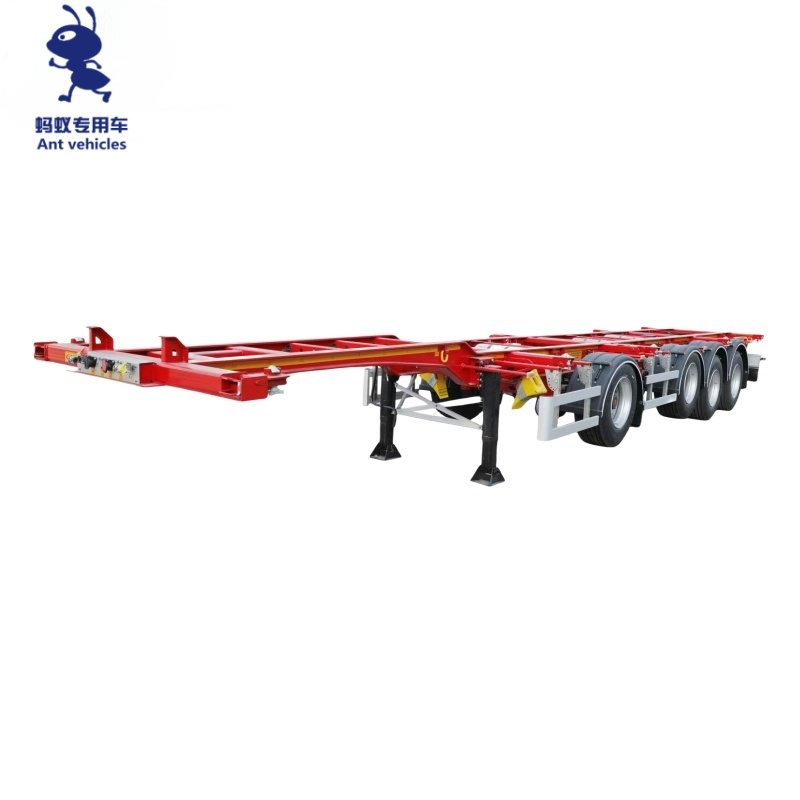
When a semi-trailer is uncoupled, its weight is distributed between the landing gear and the axle group. The supported front load depends on the trailer's own mass, cargo position, support locations, and operating configuration.
Consequently, neither payload capacity nor gross trailer mass directly states the required landing gear capacity. The kingpin load measured while coupled is also not automatically identical to the reaction at the landing gear after uncoupling because the support positions differ.
Ask the trailer manufacturer to establish the relevant support reactions for the intended loading cases. For an existing trailer, provide the chassis identification, layout drawing, and available loading information rather than selecting a replacement from appearance alone.
A uniform load and a concentrated front load can produce different landing gear reactions even when total cargo mass is unchanged. Loading or unloading can create additional operating cases that need separate review.
Identify whether the uncoupled trailer will be loaded, unloaded, or entered by handling equipment. Such operations may require additional approved supports and procedures; a static landing gear rating alone does not establish suitability.
Do not assume the two legs always share the load equally. Uneven ground, trailer twist, installation differences, and cargo offset can increase the load on one side.
For buyers comparing Ant Vehicle's semi-trailer range, landing gear selection should form part of the complete trailer specification and loading review.
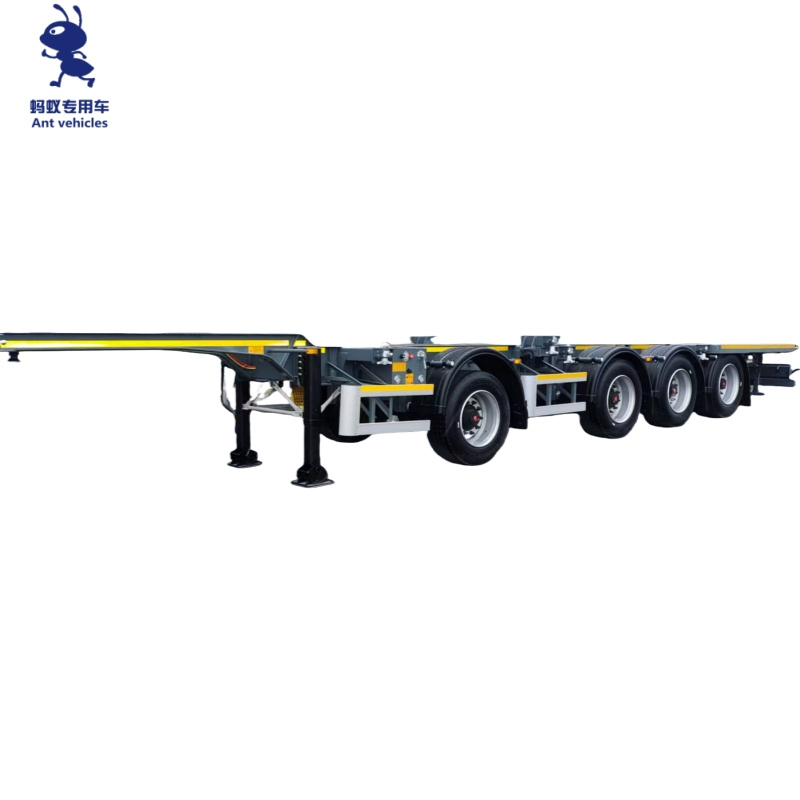
Capacity is only one part of compatibility. A replacement set must also fit the chassis and provide the required operating height without exceeding its approved extension.
Compare dimensions using the same reference points. “Mounting height” can be misunderstood if one quotation measures from a different bracket position or foot reference than another.
Retracted height and available ground clearance during travel.
Usable extension and required support height.
Mounting plate dimensions, hole pattern, and mounting orientation.
Leg spacing and connection-shaft length.
Crank side, handle clearance, and storage position.
Foot type, dimensions, and articulation where applicable.
Clearance to chassis members, storage boxes, and nearby equipment.
Longer travel does not automatically make a model more suitable. Confirm the permitted working range and any restrictions associated with extension or installation geometry.
The load path includes the feet, legs, mounting plates, fasteners, braces, and trailer frame. A component rating does not establish the capacity of an incomplete or modified installation.
Obtain the approved mounting instructions and verify the condition of the chassis attachment areas. For replacement work, damaged brackets or missing braces need attention before the new equipment is accepted.
When specifying a container skeleton trailer, confirm the landing gear arrangement on the project drawing rather than assuming every chassis uses the same mounting details.
Landing gear can remain within its component rating while the ground beneath a foot settles or fails. Soft soil, damaged pavement, slopes, and uneven contact can compromise the support arrangement.
Specify the expected parking surface and obtain an approved support plan where ground-bearing capacity is uncertain. Foot dimensions and any supplementary support must suit the actual load and surface conditions.
Landing gear should not be used to drag the trailer sideways or compensate for an unstable parking position. Follow the trailer and landing gear manufacturers' instructions for parking, uncoupling, and coupling.
Use the specified gear and operating method for the task. Do not assume that high gear is suitable for lifting under load, or that adding leverage to the crank is an acceptable response to excessive operating resistance.
Before use, check for visible distortion, loose or missing attachments, damaged feet, and abnormal operation. Follow the model-specific inspection and lubrication schedule. Unusual resistance or uneven movement should be investigated rather than overcome by force.
For technical background, consult the relevant equipment manufacturer's operating and maintenance instructions. Instructions for another model can explain general concepts but do not replace the manual supplied with the installed landing gear.
A quotation stating only a nominal tonnage is incomplete. Request the exact model, rating definitions, installation drawing, and included accessories so that competing offers can be compared on the same basis.
Procurement item | Information to confirm |
|---|---|
Model identification | Manufacturer, complete part number, and configuration. |
Capacity definitions | Lifting rating, static rating or test load, units, and single-leg or set basis. |
Operating load cases | Supported front load, cargo arrangements, and uncoupled operations. |
Dimensions | Mounting references, retracted height, travel, hole pattern, and leg spacing. |
Installation | Braces, attachment requirements, chassis interfaces, and approved instructions. |
Supply scope | Legs, feet, crank, connection shaft, brackets, and mounting hardware. |
Service support | Manuals, inspection requirements, spare parts, warranty, and traceability. |
Retain the approved drawing and component specification with the purchase order. For a replacement, verify compatibility before installation; for a new trailer, include landing gear details in the final configuration review.
Ant Vehicle provides trailer customization services. Buyers should request confirmation of the proposed landing gear model and installation arrangement for their selected trailer.
To discuss a trailer project, contact Ant Vehicle with the trailer type, loading conditions, operating surface, required support height, and available drawings. Request a quotation identifying the lifting and static ratings separately.
A: Do not assume so. Lifting and stationary support are different duties. Use the stated lifting capacity and its operating conditions when assessing a lifting task.
A: It depends on the product documentation. Confirm whether the rating applies to one leg, a pair, or another defined assembly before comparing specifications.
A: No. Mounting dimensions, travel, bracing, chassis compatibility, and operating clearances must also match. A higher rating does not resolve an incompatible installation.
A: No automatic equivalence should be assumed. Ask the manufacturer to identify the permitted service rating and explain the conditions attached to the test figure.
A: Provide the original nameplate or part number, chassis details, mounting drawing, retracted height, travel, foot arrangement, and photographs of the complete installation.


