
Views: 0 Author: Site Editor Publish Time: 2026-08-03 Origin: Site
Improper load balance and mismatched axles create severe risks for modern commercial fleets. Fleet operators face catastrophic rollovers, heavy DOT overweight fines, and fast equipment degradation. We must solve these critical issues to maintain profitable operations. Success means achieving optimal payload utilization while ensuring Federal Bridge Law compliance. You need predictable braking dynamics and maximum stability during high-speed transit. This article provides a comprehensive technical evaluation framework for transport managers. We will help you match axle configurations to your specific operational load profiles. You will learn how to inform procurement strategies and standardize safe loading protocols across your fleet. Improper setups destroy profit margins through accelerated tire wear and dangerous suspension damage. We evaluate the exact physics of handling and structural stability. You can apply these insights immediately to upgrade your daily freight management. Our systematic approach removes guesswork from the loading dock entirely.
Proper flatbed trailer load distribution reduces a trailer’s center of gravity (CG), directly mitigating lateral sway and rollover risks.
Axle spacing (tandem vs. spread) alters allowable weight limits under federal regulations, offering flexibility for uneven loads at the cost of maneuverability.
Tri-axle setups are essential for dense, concentrated freight, but require careful cost-benefit analysis regarding toll expenses and empty-weight penalties.
Selecting the right heavy-duty flatbed trailer requires balancing your primary freight profile against suspension types, axle placement, and driver experience levels.
Every freight movement relies on fundamental physics. Your center of gravity (CG) dictates overall vehicle stability. Vertical and horizontal load placement alters the pivot point of the equipment. If you load tall machinery, the vertical CG rises significantly. This high pivot point amplifies lateral forces during cornering. It makes the trailer highly susceptible to rollovers. Proper flatbed trailer load distribution lowers this CG. It keeps the trailer grounded and predictable during evasive maneuvers.
Traction and braking dynamics depend heavily on weight placement. Placing too much freight on the trailer rear acts as a lever. It lifts the tractor's steer axles off the pavement. You lose crucial steering control and front braking power. Conversely, pushing too much weight onto the kingpin overloads the drive axles. This crushes the tractor suspension and creates severe structural stress. Both scenarios compromise stopping distances and highway safety.
Many drivers blindly follow the traditional 60/40 rule. This rule suggests placing 60% of weight in the front half. Modern engineers warn against applying this broadly. We must evaluate this rule against modern engineering tolerances. A uniform load of lumber behaves differently than a dense steel coil. Concentrated loads require precise centering over structural cross-members. The 60/40 rule often fails for dense, localized freight.
Structural deflection happens when you ignore these physics. Improper placement stresses the main beams beyond their yield strength. The metal bends downward. You eventually lose the built-in trailer camber. This camber is the upward bow designed into the empty trailer. Losing it leads to premature trailer failure. Decking boards warp, and welds crack under the strain. Accurate load positioning prevents this destructive bending.
Axle spacing dictates your legal hauling capacity. Closed tandem axles represent the industry standard for general freight. Engineers space these axles typically 49 to 60 inches apart. Federal regulations limit closed tandems to 34,000 pounds combined. They offer distinct operational advantages. They are highly maneuverable in tight city spaces. You experience significantly less tire scrub during sharp turns.
However, closed tandems require highly precise loading. You must balance the freight perfectly to avoid axle overweight violations. A slight miscalculation easily pushes one axle over its limit. This results in hefty DOT fines at weigh stations.
Spread axles use a different regulatory mechanism. Manufacturers space these axles at least 10 feet apart. The DOT treats each axle as a single independent entity. This configuration allows up to 20,000 pounds per axle. You achieve 40,000 pounds combined capacity. This setup forgives slight miscalculations in load placement. It rides smoother over highway bumps.
Spread axles come with noticeable operational trade-offs. The wide footprint causes severe tire scrub during tight turns. The front axle drags sideways while the rear pivots. You will face higher suspension maintenance and frequent tire replacements. We compare these configurations below to simplify your decision.
Configuration | Axle Spacing | Federal Weight Limit | Maneuverability | Load Forgiveness |
|---|---|---|---|---|
Closed Tandem | 49 - 60 inches | 34,000 lbs combined | High (Tight turning radius) | Low (Requires precise placement) |
Spread Axle | 10+ feet | 40,000 lbs combined | Low (Severe tire scrub) | High (Absorbs uneven weights) |
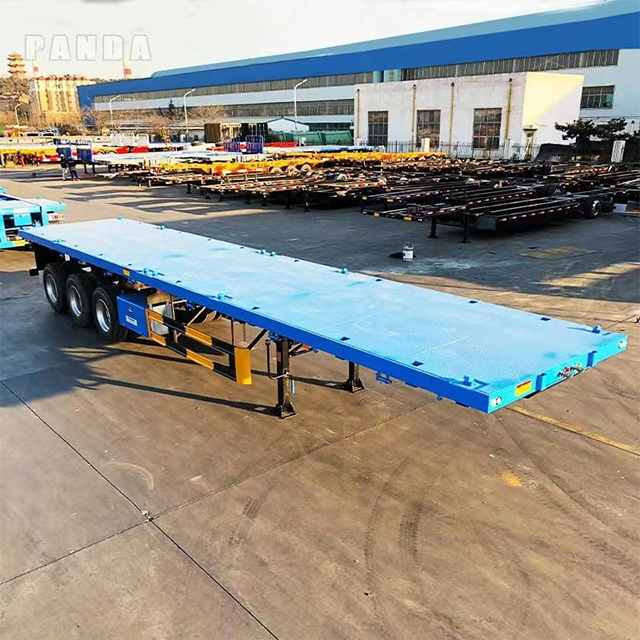
Standard axles fall short when hauling specialized heavy cargo. You must align your equipment with your primary use cases. Upgrading from a spread-axle setup becomes necessary for extreme hauling. A Tri Axle Flatbed Trailer excels at transporting heavy machinery and raw metals. It proves invaluable when navigating states with specific multi-axle weight leniencies. Specialized haulers rely on this extra axle for survival.
A third axle transforms your load distribution flexibility. It fundamentally changes the Federal Bridge Gross Weight Formula calculations. The formula rewards spreading weight across more axles over a longer distance. This addition allows for higher gross vehicle weights. It protects localized deck areas from over-stressing. You can confidently load a dense 50,000-pound transformer. The extra wheels distribute the immense pressure evenly into the pavement.
Lift axle technology modernizes these multi-axle configurations. Engineers utilize a liftable third axle to maximize fleet efficiency. The driver drops the axle only when hauling massive loads. They lift it when running empty or carrying light freight. This feature optimizes your equipment operations. Lifting the axle saves rubber. It improves fuel economy by reducing rolling resistance.
Properly managing this third axle requires driver expertise. An improperly deployed lift axle can actually throw off your weight distribution. If you apply too much downward air pressure, you unload the drive tires. This reduces traction. You must calibrate the lift axle regulator to match the specific cargo weight.
Fleet procurement demands strict attention to engineering specifications. Many buyers confuse a main beam rating with a concentrated load rating. A trailer might boast a 100,000-pound evenly distributed rating. This does not equate to a 100,000-pound capacity for a 4-foot footprint. Metal coils concentrate massive weight into tiny deck areas. You must specify the concentrated load rating before buying. A strong Heavy Duty Flatbed Trailer relies on tightly spaced cross-members to handle this.
Suspension selection directly impacts load equalization across your axles. Buyers evaluate air ride suspensions versus mechanical spring setups. Mechanical springs offer rugged simplicity for off-road construction sites. However, air ride systems dynamically adjust to keep the deck height level. They distribute pressure equally among all tires. They stabilize the load actively during transit. This prevents dangerous freight shifting.
Frame materials define your carrying capacity and durability. You must assess steel, aluminum, and combination frames. Steel provides ultimate durability for rough environments. Aluminum offers immense weight savings. It allows you to haul heavier payloads legally. Combination frames use steel main beams and aluminum decking. You must assess weight savings against flex characteristics. Aluminum flexes more when hauling high-center-of-gravity loads.
Tie-down and securement infrastructure dictates operational safety. You must review winch tracks, chain pop-ups, and stake pockets. Their placement determines compliance with FMCSA cargo securement rules. Sliding winch tracks offer infinite adjustment points for odd-shaped cargo. Chain pop-ups secure heavy machinery directly to the main beams. You must ensure the securement working load limit exceeds the cargo weight.
Top-tier equipment fails without standardized loading practices. You must establish strict pre-loading calculations. Fleets utilize load distribution software before dispatch. They use onboard or yard axle-weight scales to verify compliance. You cannot rely on visual estimates. Scales confirm exactly how weight transfers through the fifth wheel. They eliminate overweight citations before the truck hits the highway.
Moving beyond guesswork requires comprehensive driver training and strict Standard Operating Procedures (SOPs). You must establish clear, documented procedures. Training ensures safety and consistency.
Dunnage Placement: Instruct drivers on precisely positioning hardwood dunnage. It must sit directly over structural cross-members.
Centering Heavy Items: Mandate tape measures for dense items. Drivers must center coils and machinery perfectly between the lateral rub rails.
Fifth-Wheel Adjustment: Teach drivers how to slide the fifth wheel. Moving it forward shifts weight to the steer tires.
Trailer Tandem Adjustment: Train operators to slide trailer axles. Sliding them rearward transfers weight back toward the tractor drives.
Standardization requires a verifiable risk mitigation checklist. A robust pre-trip inspection framework prevents catastrophic failures on the road. Supervisors must enforce this checklist daily.
Inspect suspension airbags for proper inflation and obvious leaks. Deflated bags cause extreme weight shifts.
Verify tire pressure manually. Correct pressure dictates sidewall stiffness and lateral stability during turns.
Check securement tension. Drivers must re-tighten straps and chains within the first 50 miles of transit.
Examine main beams for hairline cracks near the suspension hangers.
Equipment stability directly relies on matching physical trailer configurations to precise loading practices. You must align tandem, spread, or tri-axle setups with your distinct freight profile. Structural integrity and handling predictability depend entirely on rigorous operational standards. Careful engineering selection prevents equipment degradation.
Base your trailer investment on your top 80% freight profile. Standard closed tandems maximize efficiency if you haul uniform, lighter pallets. Spread or tri-axles act as necessary risk-mitigation tools for moving dense, unpredictable freight. Choose the configuration matching your daily reality.
Audit your current fleet's overweight citation history immediately. Review tire wear patterns across your equipment pool. Irregular wear indicates mismatched configurations or chronic loading errors. Use this data to determine your specific axle configuration changes for the next procurement cycle.
A: Spread axles significantly widen the trailer's turning radius. They make tight city maneuvers difficult. During sharp turns, the axles fight each other. This causes severe tire scrub on the pavement. Consequently, tires wear out much faster than on tandem setups. You trade maneuverability and tire life for higher weight capacities.
A: The maximum concentrated load depends entirely on the trailer's specific engineering rating. A trailer might hold 80,000 pounds distributed over 40 feet. However, it may only handle 45,000 pounds concentrated within a 4-foot section. You must always check the manufacturer’s coil package rating before loading dense items like steel rolls.
A: The Federal Bridge Formula prevents localized bridge damage. It calculates allowable weight based on the number of axles and the distance between them. A tri-axle adds a third load-bearing point. This lengthens the weight distribution footprint. It legally allows you to carry heavier gross loads without over-stressing highway infrastructure.
A: Yes, improper distribution destroys suspensions. Placing too much weight on one side over-compresses specific air bags or leaf springs. It forces suspension components beyond their mechanical limits. This causes blown air springs, cracked hangers, and broken U-bolts. Consistent overloading drastically reduces the lifespan of the entire undercarriage.
A: You must center high-center-of-gravity freight perfectly down the longitudinal axis. Secure the cargo using heavy-duty chain tie-downs pulling at opposing angles. Place thick hardwood dunnage directly over the strongest frame cross-members. Drive smoothly, reduce speeds on curves, and utilize an air ride suspension to dynamically absorb lateral sway.


