
Views: 0 Author: Site Editor Publish Time: 2026-09-21 Origin: Site
Maximizing fleet profitability in mixed-fuel distribution requires balancing payload capacity against routing flexibility. Transporting multiple petroleum products in a single run introduces complex variables. You must manage axle weight distribution, cross-contamination risks, and drop-site efficiency carefully. Mixing products like premium gasoline, unleaded, and diesel demands strict physical separation. We provide a comprehensive technical evaluation framework below. You will learn exactly how to configure fuel tank trailer compartments safely. Optimized configurations streamline your daily deliveries. They ensure full regulatory compliance across every route. We cover essential strategies ranging from bulkhead engineering to advanced discharge manifold architectures. Read on to master these critical design principles.
Compartment sizing must align with specific route demands; standard 4- or 5-compartment layouts (e.g., 3000/1500/1500/2500 gallons) offer the best baseline for retail station drops.
Double bulkheads with leak-detection voids are non-negotiable for mitigating cross-contamination between incompatible fuels.
Manifold and discharge system architecture dictates operational speed and prevents operator error during multi-product offloading.
Material choice directly impacts structural integrity and maximum payload, making aluminum the preferred standard for multi-compartment setups.
Misaligned compartment sizes inevitably lead to partial loads. You end up driving empty compartments across long distances. Increased deadhead miles destroy route efficiency quickly. Hauling empty space means you leave potential revenue at the loading terminal.
An optimized configuration solves these daily delivery bottlenecks. It achieves the maximum allowable gross vehicle weight (GVW). It also matches your target customer order volumes perfectly. Retail gas stations require completely different delivery volumes compared to bulk commercial drops. You must align your equipment closely to these distinct market needs.
Consider the daily revenue loss of hauling empty air. Fuel terminals typically load products in strict standard increments. If your compartments do not match these increments, terminal operators underfill them. You lose hundreds of gallons of payload capacity per trip. Over an entire year, this inefficiency compounds significantly. You bleed potential revenue every time a driver dispatches a partially loaded rig.
Engineers design trailers using asymmetrical compartment sizes for very specific reasons. Larger compartments usually sit at the extreme ends. Smaller compartments occupy the center trailer sections. This deliberate design maintains a highly safe trailer center-of-gravity. Fluid dynamics change drastically during highway transit. Placing heavy volumes directly over the kingpin and rear axles stabilizes the entire vehicle.
Multi-compartment load sequences directly impact axle weight compliance. You must consider the Federal Bridge Formula during sequential drop-offs. Unloading a rear compartment first shifts the remaining liquid weight forward. This action might overload your drive axles unexpectedly. Drivers must sequence their deliveries logically. They need to calculate weight shifts before opening any discharge valves.
When should you specify a 5-compartment layout over a standard 4-compartment setup? You must assess the trade-off between product flexibility and tare weight penalties. Every additional bulkhead adds hundreds of pounds to the trailer structure. A 5-compartment layout offers unmatched routing flexibility for diverse deliveries. However, you sacrifice overall payload capacity due to the heavier empty weight.
Trailer Layout Capacity Comparison
Layout Type | Typical Volume Split (Gallons) | Best Use Case | Weight Penalty |
|---|---|---|---|
4-Compartment | 3000 / 1500 / 1500 / 2500 | Standard retail station drops | Low |
5-Compartment | 2500 / 1200 / 1000 / 1500 / 2300 | Diverse commercial mixed loads | High (Extra Bulkhead) |
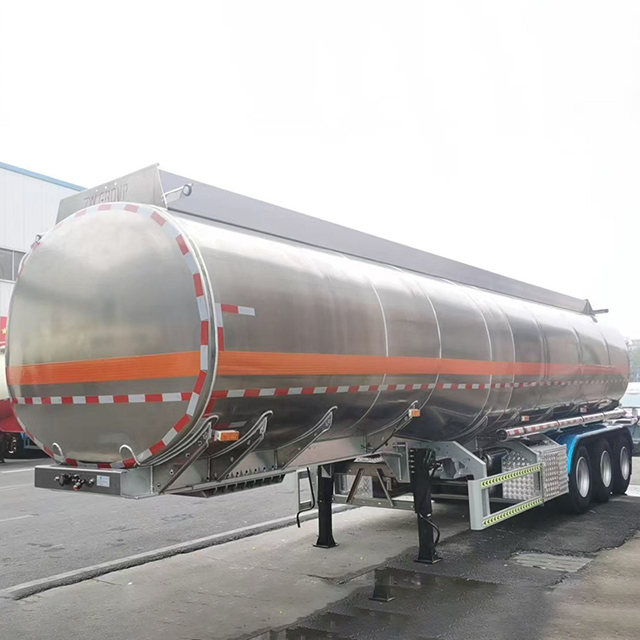
Transporting incompatible fuels requires impeccable internal engineering. Single bulkheads save weight but introduce massive contamination risks. A tiny weld fracture could mix premium gasoline into standard diesel. We rely on double bulkheads to create physical air voids between compartments. These empty spaces act as a mandatory fail-safe mechanism.
Meeting DOT and regulatory requirements remains strictly non-negotiable. Agencies tightly regulate transporting aviation fuel adjacent to standard diesel. You must utilize double bulkheads to transport these volatile combinations legally. Regulators demand a verifiable physical barrier separating incompatible hazardous materials.
You must also monitor these systems for internal failure risks continually. Engineers implement weeping systems and drainage ports within the bulkhead voids. These ports allow operators to instantly identify inner-weld stress. If a seal degrades, product drips out of the weep hole visibly. You catch the leak before any cross-contamination ruins the adjacent payload. This simple mechanical indicator prevents catastrophic product spoilage.
You must match your API bottom loading configurations to regional terminal infrastructure. Terminals utilize highly specific loading arms and vapor recovery connections. Your bottom-loading valves must align perfectly to ensure seamless terminal compatibility. Mismatched fittings cause severe delays at the loading rack.
Manifold architecture introduces both impressive benefits and severe operational risks. Manifolds allow operators to offload multiple products from a single point. This reduces physical labor and speeds up the delivery process. However, improper valve sequencing causes catastrophic accidental product mixing. An inattentive operator might accidentally dump diesel into an unleaded underground tank.
You must carefully evaluate pneumatic versus manual controls. Advanced bottom-offload systems utilize pneumatic safety interlocks. These interlocks physically prevent premature or mixed-discharge operator errors. The system refuses to open valves unless the correct sequence engages.
Follow these mandated steps for safe multi-product offloading:
Verify the receiving underground tank volume matches the compartment volume precisely.
Connect the designated vapor recovery hose to the specific station port.
Attach the discharge hose strictly to the isolated API valve.
Engage the pneumatic interlock system to open the emergency bottom valve.
Monitor the sight glass constantly during the entire delivery flow.
You must evaluate construction materials rigorously to maximize operational efficiency. Specifying an Aluminum Tanker Trailer offsets the heavy tare weight of multiple internal bulkheads. Complex piping systems and pneumatic manifolds add significant structural weight. Aluminum provides immense strength while keeping the empty weight remarkably low.
Corrosion resistance directly guarantees refined product purity over time. Carbon steel rusts eventually due to internal moisture condensation. Internal flaking rust easily contaminates sensitive refined fuels like aviation gas. Aluminum offers natural resistance against rust and internal oxidation. You eliminate the need for expensive internal epoxy linings entirely.
Multi-compartment trailers face immense structural stress from dynamic liquid surge. Every time the driver brakes, thousands of gallons crash against the bulkheads. You must address this severe fatigue resistance proactively. Modern aluminum welding techniques mitigate stress cracking effectively. Manufacturers utilize automated seam welding to reinforce critical structural joints. This ensures the vessel withstands years of brutal dynamic loading.
Purchasing the correct equipment demands a structured evaluation process. When specifying your Fuel Tank Semi Trailer, follow this precise shortlisting framework to avoid costly mistakes.
Audit your most common dispatch logs thoroughly. You must determine the ideal gallon splits for your specific routes. A common ratio might sit around 60% gas and 40% diesel. Size your compartments to mirror these exact historical averages closely.
Ensure your trailer components integrate smoothly into local infrastructure. Verify these critical connection points:
API bottom-loading valves match local terminal rack arms.
Vapor recovery systems align with standard retail station ports.
Discharge hose diameters fit standard underground tank drops.
Avoid over-specifying your internal compartments whenever possible. More compartments directly result in less total payload capacity. They also guarantee higher routine maintenance obligations over the equipment lifespan. Do not buy a five-compartment rig if four compartments handle your daily needs.
Always request detailed payload distribution charts from prospective manufacturers. Ask for comprehensive center-of-gravity schematics before finalizing your build sheet. You need hard mathematical proof verifying the trailer performs safely fully loaded.
Configuring a tanker for mixed loads requires a strict mathematical balancing act. You constantly weigh payload maximization against regulatory weight compliance. You also must engineer ironclad contamination security into the vessel itself. Success comes down to analyzing your actual daily operational data closely.
Prioritize configurations serving 80% of your typical routing needs efficiently. Do not over-engineer the trailer for incredibly rare edge cases. A streamlined, highly utilized setup performs much better than an overly complex one. Keep your equipment configurations as simple and targeted as possible.
Consult directly with a specialized heavy-haul manufacturing engineer immediately. They can model your specific fluid weights and strict axle constraints accurately. Let the data drive your final compartment layout decisions completely.
A: Compartment bulkheads act as solid walls, completely stopping front-to-back surge, whereas baffles only slow it down. Smaller compartments inherently reduce dynamic liquid movement.
A: Yes, provided the trailer utilizes double bulkheads with a ventilated void space to prevent undetectable cross-leaking.
A: Typically between 9,000 and 9,500 gallons total, depending on the tractor's weight, trailer material (aluminum), and local axle weight regulations.


