
Views: 0 Author: Site Editor Publish Time: 2026-11-09 Origin: Site
A trailer kingpin must match more than the opening in a tractor's fifth wheel. Buyers also need to confirm the coupling configuration, load ratings, installed height, and clearance between the tractor and trailer.
Before ordering a semi-trailer for an existing fleet, collect the fifth wheel identification and tractor dimensions. Matching these details during quotation is more effective than discovering an incompatible connection after delivery.
Two established kingpin size designations are 2 inches and 3.5 inches. These refer to the nominal coupling interface, not the mounting flange diameter or the overall width of the kingpin head.
The exact inch conversions are 50.8 mm and 88.9 mm. Supplier descriptions may use shorthand such as “50” and “90,” but those labels do not replace the applicable dimensional drawing or product designation.
Kingpin designation | Required interface match | Additional checks |
|---|---|---|
2 inch | A fifth wheel configured and approved for a 2-inch kingpin. | Exact model, ratings, mounting arrangement, and installed geometry. |
3.5 inch | A fifth wheel configured and approved for a 3.5-inch kingpin. | Exact model, ratings, mounting arrangement, and installed geometry. |
A fifth wheel family may offer different locking configurations. A catalogue showing both sizes does not mean every installed unit accepts both without conversion.
Record the complete part number, identification plate, and any documented modifications. Do not infer compatibility from the tractor brand, engine power, or appearance of the fifth wheel.
For a replacement kingpin, also confirm the retention system and trailer plate arrangement. A matching coupling diameter alone does not establish replacement-part compatibility.
Fifth wheel mounting height is a component or installation dimension measured from a specified reference. The coupling height above ground also depends on the tractor chassis, tyres, suspension, and mounting equipment.
Ask the tractor supplier for the height from level ground to the fifth wheel bearing surface under defined operating conditions. Compare it with the trailer's specified coupling height at its intended ride attitude.
State whether measurements are laden or unladen and identify the suspension setting. Figures measured under different conditions can appear compatible while describing different vehicle positions.
Do not use landing gear adjustment to justify an unsuitable running configuration. Likewise, kingpin diameter does not determine the required coupling height.

Review the front trailer geometry together with the proposed tractor installation.
Request a compatibility drawing showing the kingpin position, trailer front outline, tractor cab, rear chassis, tyres, and mudguards. Review clearance through the intended turning and articulation range rather than only in a straight, level position.
Include air and electrical line routing. Connections need sufficient movement without stretching, pinching, or contacting nearby equipment.
For low bed semi-trailer projects, include the gooseneck underside and tractor rear components in the review. Agree on the required clearances with the responsible vehicle engineers.
Fifth wheel specifications can list both an imposed vertical load and a D-value. These describe different aspects of coupling capability and should be checked separately.
The D-value is expressed in kilonewtons and is used in coupling selection for the vehicle combination. It is not a payload rating in tonnes. Have the responsible supplier or engineer establish the required value using the applicable calculation method.
Review the kingpin, fifth wheel, mounting system, and vehicle limits together. A higher-rated component does not increase the permitted capacity of the surrounding installation.
Kingpin performance depends on the specified installation, including the trailer plate and its supporting structure. Obtain the approved drawing and installation instructions rather than selecting a pin from diameter alone.
Changes between kingpin sizes require a model-specific review. Some systems permit an approved conversion, while others require different components or structural arrangements.
Do not assume an adapter advertised for yard movements is approved for highway service. Confirm its stated application and approval conditions before including it in a transport specification.
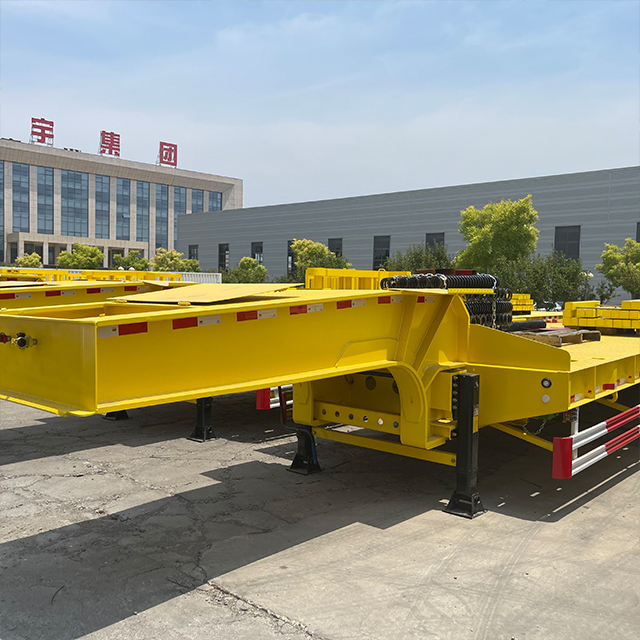
Use an approved drawing to confirm coupling height and underside interfaces; an exterior photograph does not establish these dimensions.
When comparing tractor truck options with a proposed semi-trailer, send the supplier a consistent set of identification, dimensional, and operating information.
Item | Information to provide or request |
|---|---|
Tractor identification | Model, chassis configuration, tyre specification, and suspension details. |
Fifth wheel identification | Manufacturer, complete model, nameplate photograph, and installed lock size. |
Kingpin specification | Size, part number, dimensional drawing, and retention arrangement. |
Height information | Ground-to-coupling height and trailer design height, with measurement conditions. |
Ratings and duty | Vehicle masses, imposed load, required D-value, routes, and operating conditions. |
Clearance drawing | Kingpin location, cab space, chassis interference, and articulation review. |
Acceptance documents | Agreed configuration, installation instructions, and compatibility confirmation. |
For a mixed fleet, identify which tractors will tow the trailer. Approval of one combination should not be treated as approval of every vehicle carrying the same brand name.
For used equipment, have the kingpin and fifth wheel inspected using the manufacturer's specified methods and wear limits. Nominal size identification does not establish serviceable condition.
Ant Vehicle offers vehicle customization services. Include coupling requirements in the quotation and final configuration review.
Contact Ant Vehicle with your tractor details, fifth wheel identification, coupling height, and intended trailer duty. Request confirmation of the proposed kingpin configuration and any further information needed to assess compatibility.
A: No. Established interfaces include 2-inch and 3.5-inch versions. Confirm the exact installed kingpin and fifth wheel configuration rather than assuming one size fits every tractor.
A: No. Payload remains subject to the complete vehicle specification, component ratings, installation, and applicable operating limits.
A: Some models allow a manufacturer-approved conversion. Confirm the required parts, documentation, ratings, and approval conditions for the exact unit.
A: No. Interface size and installed height are separate checks. Compare the tractor and trailer heights using clearly defined reference points and operating conditions.
A: Photographs help identify equipment, but they do not replace dimensional drawings, ratings, model identification, and the required engineering review.


