
Views: 0 Author: Site Editor Publish Time: 2026-11-16 Origin: Site
A trailer tire load rating describes a tire's load-carrying capability under specified conditions. It does not, by itself, establish the payload capacity of a semi-trailer.
For fleet buyers, the main checks are straightforward: identify the exact tire, read the correct single or dual rating, compare it with the required wheel-position loads, and confirm wheel compatibility. A quotation stating only tire size and ply rating leaves important selection information unresolved.
A size designation identifies dimensions and construction, but tires of the same nominal size can have different load and speed capabilities. Request the complete service description and manufacturer data sheet for the proposed product.
For example, a service description written as 154/150 L contains two load indices and a speed symbol. The numbers are codes that must be converted using the relevant load-index table; they are not loads expressed directly in kilograms.
Illustrative marking | Meaning | Reference value |
|---|---|---|
154 | Load index for single fitment. | 3,750 kg per tire under the specified conditions. |
150 | Load index for dual fitment. | 3,350 kg per tire under the specified conditions. |
L | Speed symbol associated with the service description. | 120 km/h under the specified conditions; not a recommended operating speed. |
This is a marking example, not a specification for an Ant Vehicle trailer. Confirm the actual tire markings and operating limits before applying these values.
A PR designation should not be used as a substitute for the tire's stated load capacity. When a quotation lists “18PR,” also request the load index or published maximum loads, speed capability, and applicable inflation information.
Ant Vehicle's Heavy Duty Tri Axle Flatbed Trailer page lists 12R22.5-18PR, TR668 tires and 9.0-22.5 rims. Buyers should request the exact tire manufacturer and current technical sheet rather than deriving capacity from this abbreviated specification.
Single fitment means one tire at each axle end. Dual fitment means two tires at each axle end. Where a tire carries a single/dual service description, use the capacity corresponding to the installed arrangement.
For the illustrative 154/150 marking, each tire in a dual arrangement has the stated 3,350 kg rating. The second number does not describe the combined capacity of the pair.
Do not use the higher single-fitment value simply because it produces a more favorable total. Also check whether a manufacturer's load table presents values per tire, per axle end, or per axle before performing calculations.
For illustration, four tires each rated at 3,350 kg in dual service give a nominal combined tire capacity of:
4 × 3,350 kg = 13,400 kg
This calculation does not approve a 13,400 kg axle load. Wheel ratings, axle and suspension limits, load distribution, operating conditions, and applicable vehicle limits still need separate verification.
A tire-capacity total also does not prove that every tire carries an acceptable load. An unevenly loaded trailer can overload one side while remaining below a combined arithmetic total.
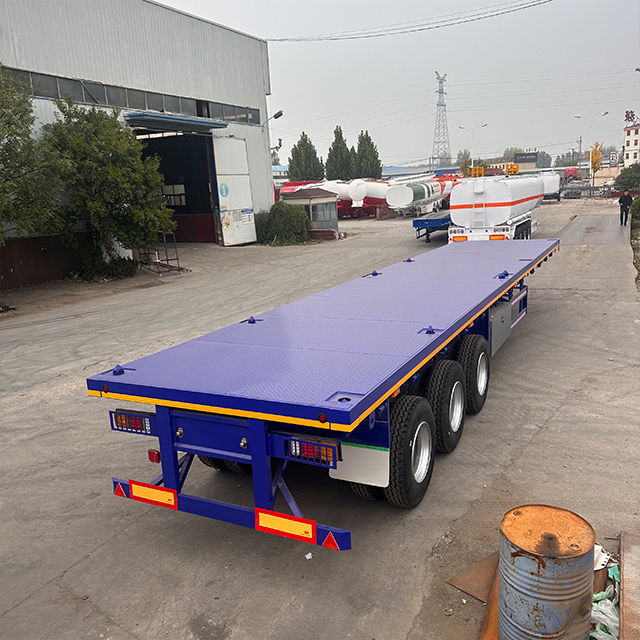
Confirm the installed wheel arrangement and individual load requirements; exterior photographs do not establish tire ratings.
Confirm the tire manufacturer's approved rim widths and profiles. A matching nominal diameter does not establish that any wheel of that diameter is suitable.
Request the wheel's load and pressure limits, identification, and mounting specifications. Check the complete assembly, including hub fitment, fasteners, and valve equipment, with the responsible supplier.
For dual assemblies, verify the specified minimum dual spacing. Tire width and wheel geometry affect clearance between the tires; visual separation on an unloaded vehicle is not a complete fitment check.
A tire that fits dimensionally may still be unsuitable for the intended axle position or service. Identify whether the trailer operates on long-haul highways, regional routes, construction access roads, or mixed surfaces.
Provide the expected operating speed and duty to the tire supplier. Do not assume a higher load index makes a tire suitable for every application, or independently increase its permitted load because the vehicle usually travels slowly.
Before changing sizes, review overall dimensions, available clearance, dual spacing, and any effect on the approved vehicle configuration.
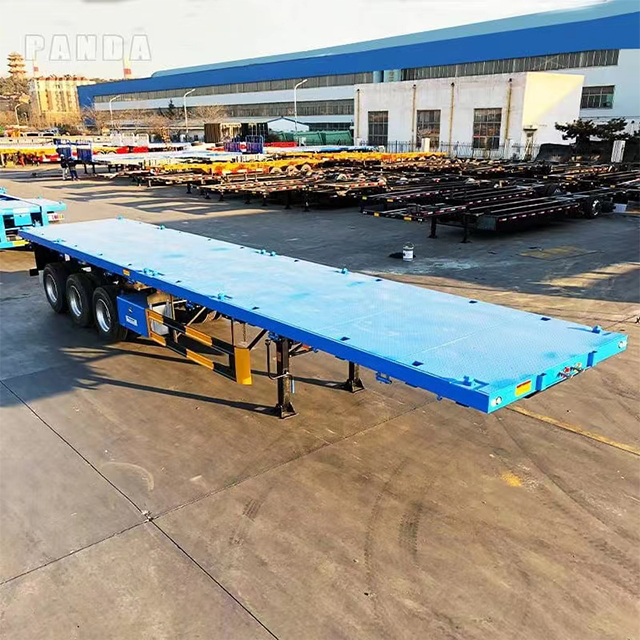
Specify tires and wheels as a compatible assembly for the intended transport duty.
Use the trailer's approved loading information and representative loaded measurements where available. Gross trailer mass divided by the number of tires is not a sufficient selection method because part of the trailer load is supported by the tractor and the remaining load may be unevenly distributed.
Use the exact tire manufacturer's load-and-inflation information for the selected product. Required operating inflation must support the load while remaining within the limits of the tire, wheel, and associated equipment.
Procurement item | Information to confirm |
|---|---|
Exact tire identification | Manufacturer, product line, size, service description, and PR or load range where applicable. |
Installed arrangement | Single or dual fitment and the number of road tires; identify spare tires separately. |
Load requirements | Approved axle loads, expected wheel-position loads, and relevant cargo arrangements. |
Wheel compatibility | Approved rim dimensions, load and pressure limits, mounting details, and dual spacing. |
Operating duty | Axle position, route conditions, operating speed, and application suitability. |
Acceptance documents | Current technical sheet, load-and-inflation table, and agreed supply specification. |
For new flatbed semi-trailer orders, record the agreed tire and wheel configuration in the purchase documents. A substitute of the same size should still be checked for ratings and application suitability.
Ant Vehicle offers vehicle customization services. Include tire requirements in the configuration review rather than leaving them as an unspecified accessory.
Contact Ant Vehicle with the trailer type, intended axle loads, wheel arrangement, routes, and operating speed. Request confirmation of the proposed tire model, single/dual capacities, and compatible wheel specification.
A: No. Trailer payload remains limited by the complete vehicle specification and applicable operating limits. Higher-rated tires do not increase axle, suspension, wheel, or chassis ratings.
A: No. It identifies the load index for each tire in dual service. Convert that index to a load value before calculating the capacity of the assembly.
A: No. Also confirm the exact product, load and speed ratings, approved rims, operating application, and relevant load-and-inflation information.
A: No. Rim width, profile, load and pressure limits, and the complete mounting arrangement must also be compatible.
A: Do not assume a direct substitution. The proposed conversion requires review of tire capacity, wheel and hub compatibility, spacing, clearance, and the vehicle manufacturer's requirements.


