
Views: 0 Author: Site Editor Publish Time: 2026-11-23 Origin: Site
Liquid does not remain stationary inside a moving tank trailer. Acceleration, braking, and cornering change how it moves, particularly when the tank is partially filled. This movement can affect vehicle handling and place changing loads on the tank structure.
Tanker baffles help control liquid motion, but their effectiveness depends on the internal arrangement and operating conditions. For buyers, the important questions concern the baffle layout, openings, attachments, cleaning access, and inspection requirements—not simply whether a quotation mentions “anti-surge plates.”
A baffle is a non-liquid-tight internal partition that deflects or restricts liquid movement. Openings allow liquid to pass through while the partition interrupts its movement along the tank.
Transverse baffles help control forward-and-backward surge during acceleration and braking. They do not immobilize the cargo, and side-to-side liquid movement can still occur.
A baffled tanker therefore still requires an appropriate loading plan and careful operation. Baffles do not remove rollover risk or make sudden braking and steering harmless.
A partially filled tank leaves space for liquid movement. During multi-stop deliveries, the amount of liquid remaining changes, so the design review should include intermediate operating conditions as well as the initial load.
Provide the manufacturer with the liquid properties, typical filling range, delivery pattern, and route conditions. Ask which loading conditions the proposed internal arrangement is intended to accommodate.
Do not fill a tank completely to avoid surge. Required expansion space and loading limits must remain part of the approved operating specification.
A baffle allows liquid communication through its openings. A compartment bulkhead forms a liquid-tight boundary between tank sections. These structures should be identified separately on the internal arrangement drawing.
Comparison | Baffle | Compartment bulkhead |
|---|---|---|
Liquid passage | Allows flow through designed openings. | Forms a liquid-tight separation. |
Main distinction | Controls liquid motion within a connected liquid space. | Separates the tank into distinct compartments. |
Different cargoes | Does not provide product segregation. | Can support segregation as part of a suitable complete tank and piping design. |
Surge limitation | Does not eliminate liquid movement. | Prevents cross-boundary flow, but liquid can still move inside each compartment. |
A multi-compartment tanker is not necessarily a tanker with one baffle in each compartment. Request a drawing showing both the sealed boundaries and any flow-through partitions.
For product separation and delivery layout, see Ant Vehicle's fuel tank trailer compartment configuration guide. Baffle selection requires an additional review of the internal flow-control arrangement.
An exterior photograph cannot confirm the number, position, or construction of tanker baffles. Ask for a drawing that identifies each internal partition and the relevant manufacturing details.
Baffle quantity, orientation, and position within each liquid space.
Material specification and nominal thickness.
Opening dimensions and locations.
Attachment details and connection to the tank structure.
Drainage paths and access for cleaning.
Access to inspect the panels, attachments, and nearby tank surfaces.
These items form a technical review checklist, not a universal design prescription. The appropriate arrangement must be established for the particular cargo, tank geometry, duty, and applicable construction requirements.
Two quotations listing the same number of baffles may describe different structures. Compare their drawings and stated design basis rather than treating the count as a performance rating.
In some tank designs, baffles or their attachment rings also contribute to structural reinforcement. Altering or removing them can therefore affect more than liquid flow. Obtain engineering approval before changing an existing arrangement.
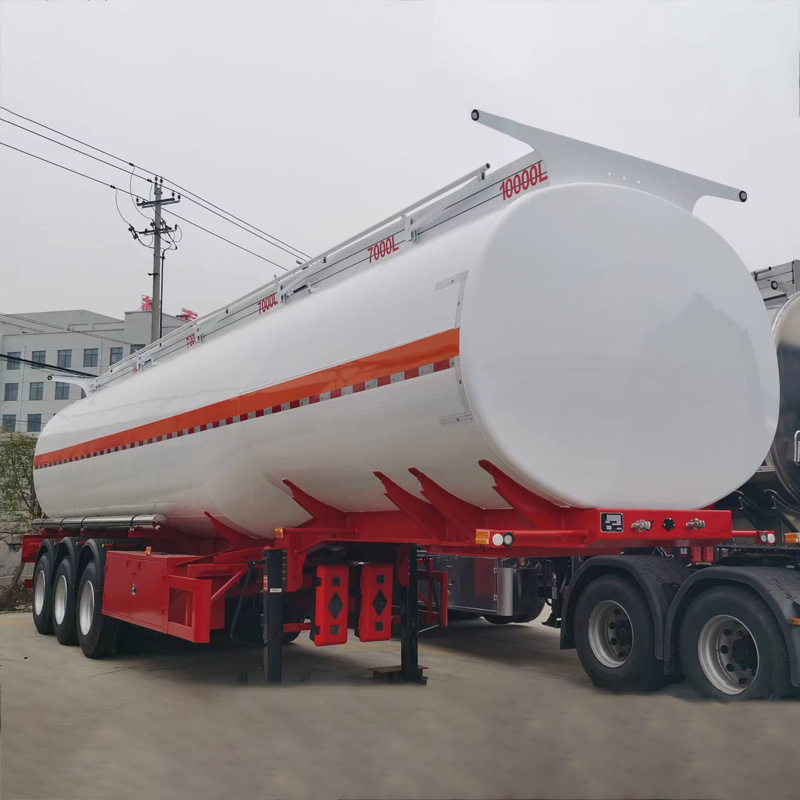
Exterior tank geometry provides context; the internal baffle arrangement must be confirmed from project drawings.
Internal partitions and attachments create additional surfaces to clean and inspect. Buyers should define the cargo-change procedure, cleaning method, and required cleanliness acceptance before approving the layout.
For hygienic or contamination-sensitive service, have the responsible specialist assess whether the proposed internals are suitable. Do not assume a fuel-tanker arrangement is appropriate for food or other sensitive cargoes.
Ant Vehicle's tank trailer product information can support an initial enquiry. Confirm the internal construction and cargo suitability separately for the proposed unit.
Ask the manufacturer and qualified inspector to identify the required checks for the actual tank design. The review should address the condition of accessible panels, attachments, welds, and adjacent tank surfaces.
Record visible cracking, distortion, corrosion, damaged attachments, or evidence of previous modifications for assessment. Where needed, the responsible inspector should specify further examination and acceptance criteria.
A leak test alone does not establish the condition or effectiveness of a non-liquid-tight baffle. Request inspection records that address the internals as well as the tank's containment function.
Tank entry is a confined-space activity. Internal inspection must use appropriate trained personnel and the applicable entry controls; opening a manway does not make entry safe.
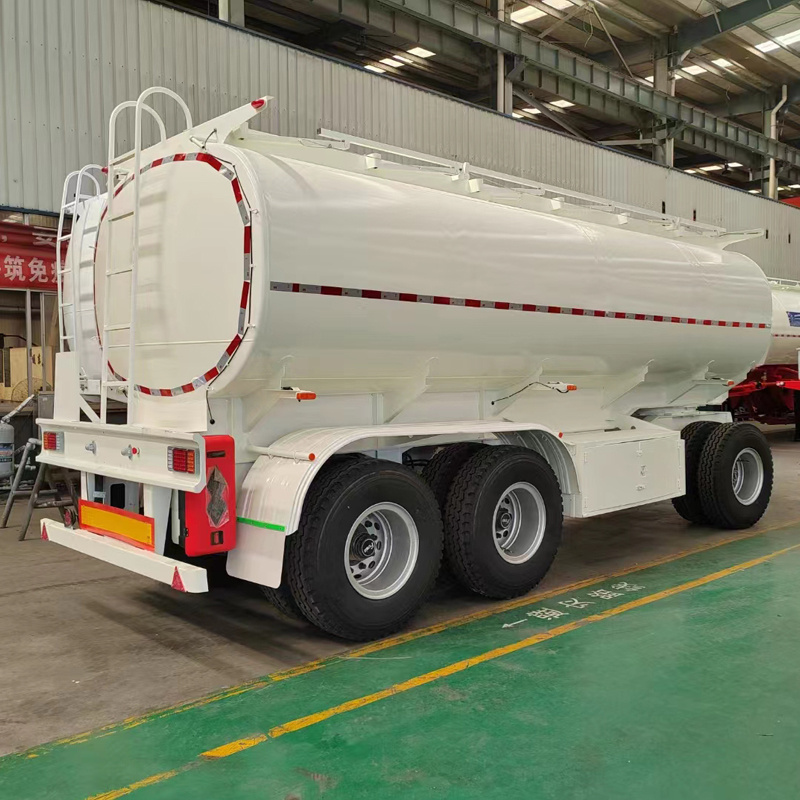
Confirm inspection access and procedures during procurement; external access equipment does not establish internal entry safety.
Procurement item | Information to confirm |
|---|---|
Cargo and operating duty | Liquid identity, relevant properties, temperature range, routes, and delivery pattern. |
Loading conditions | Typical and permitted filling conditions, including intermediate delivery loads. |
Internal arrangement | Compartment boundaries, baffle layout, openings, and attachment details. |
Cleaning and access | Drainage, cleaning requirements, inspection access, and acceptance method. |
Technical evidence | Approved drawings, material identification, and agreed fabrication and inspection records. |
Final acceptance | Applicable tank specification, operating documentation, and approved configuration. |
When comparing Ant Vehicle's fuel tank semi-trailer options, request the internal arrangement for the quoted model rather than assuming every tanker uses the same construction.
Contact Ant Vehicle with your cargo details, capacity requirements, filling conditions, and cleaning needs. Request confirmation of the proposed baffle and compartment layout, available drawings, and inspection documentation before ordering.
A: No. They help control liquid movement, particularly forward-and-backward surge with transverse arrangements. Lateral movement and handling risks can remain.
A: No. Flow-through baffles do not provide liquid-tight segregation. Separate cargoes require a suitable compartment and piping arrangement.
A: No. They prevent flow across the sealed boundaries, but liquid can still move within each compartment.
A: Baffle count alone is not a performance specification. Compare the complete layout, intended operating conditions, structural requirements, and cleaning access.
A: A retrofit requires assessment of the tank design, materials, attachment method, service history, and applicable approval requirements. Do not treat it as a routine plate-welding job.


